Thursday, June 4, 2015

HOME AGAIN!

HOME AGAIN

 In September 2014, I returned from India to my home in Florida because of my previously mentioned fractured elbow.  Here it was determined that no surgery was necessary but I did need physical theory and a bone stimulator to renew the growth of my bones so they would re-grow and connect the damaged bones.  Fortunately, it’s working nicely and the doctors will soon give me a free bill of health.

Meanwhile, I was fortunately home for the annual Harold and Caryl Unger Thanksgiving luncheon; an American holiday celebrated every year on the third Thursday of November.  I was befriended by the Ungers in the 1960s during a sailing trip in the US and British Islands. 

I have been attending Thanksgiving with them off and on ever since.  Over the years, their family has grown from four young children to four generations of children, grandchildren and great grandchildren.  This year the ages ranged from 7 months to Harold and Caryl now in their late eighties.  The size of the festivities has grown from just a few family members and friends to a potluck turkey luncheon for fifty mostly family and a few friends.  Everyone brings something. 
Tables set for fifty!
Table decerations
For the last few years, I have been the celery designate.  I always thought an odd choice. Don’t they think I can cook?  Yet every year all the celery seems as if was leapt on by vultures and devoured before dessert time.  Amazing. This year Caryl actually ask me to bring more, which I did.  Maybe they’re a family of health nuts.  Although some of the menu does not entirely attest to that theory.  Traditionally there was turkey (this year three or four - each at least 20 pounders), numerous types of dressings and cranberry sauces, sweet potato dishes, eggplant, the standard green beans, corn souffle, and other ‘sides’ including my paltry celery. ‘The desserts were as numerous and diverse as the mains, chocolate cake and many different pies; pecan chocolate, pumpkin, chocolate, apple I can’t list them all. 
 
My dear friends, Harold in the background and Caryl
As usual, Harold gave a wonderful Thanksgiving speech..  Harold has had an external heart pump for the last three years.  So on this day of giving thanks, we were all most thankful for Harold’s presence with us at this marvelous family celebration.

Note: We lost Harold on April 2, 2015. His demise was not only a loss for his loving family but also for the whole community.  The funeral was standing room only as Harold was an icon among the Miami Beach community and beyond.  He and his wife, Caryl have been my dear friends for so many years, and his death was a great personal loss to me as well as his family. 


Wendy, Harold and Caryl's elder daughter 


Wednesday, June 3, 2015

FINAL THOUGHTS ON LADAKH

        FINAL THOUGHTS ON LEH AND LADAKH


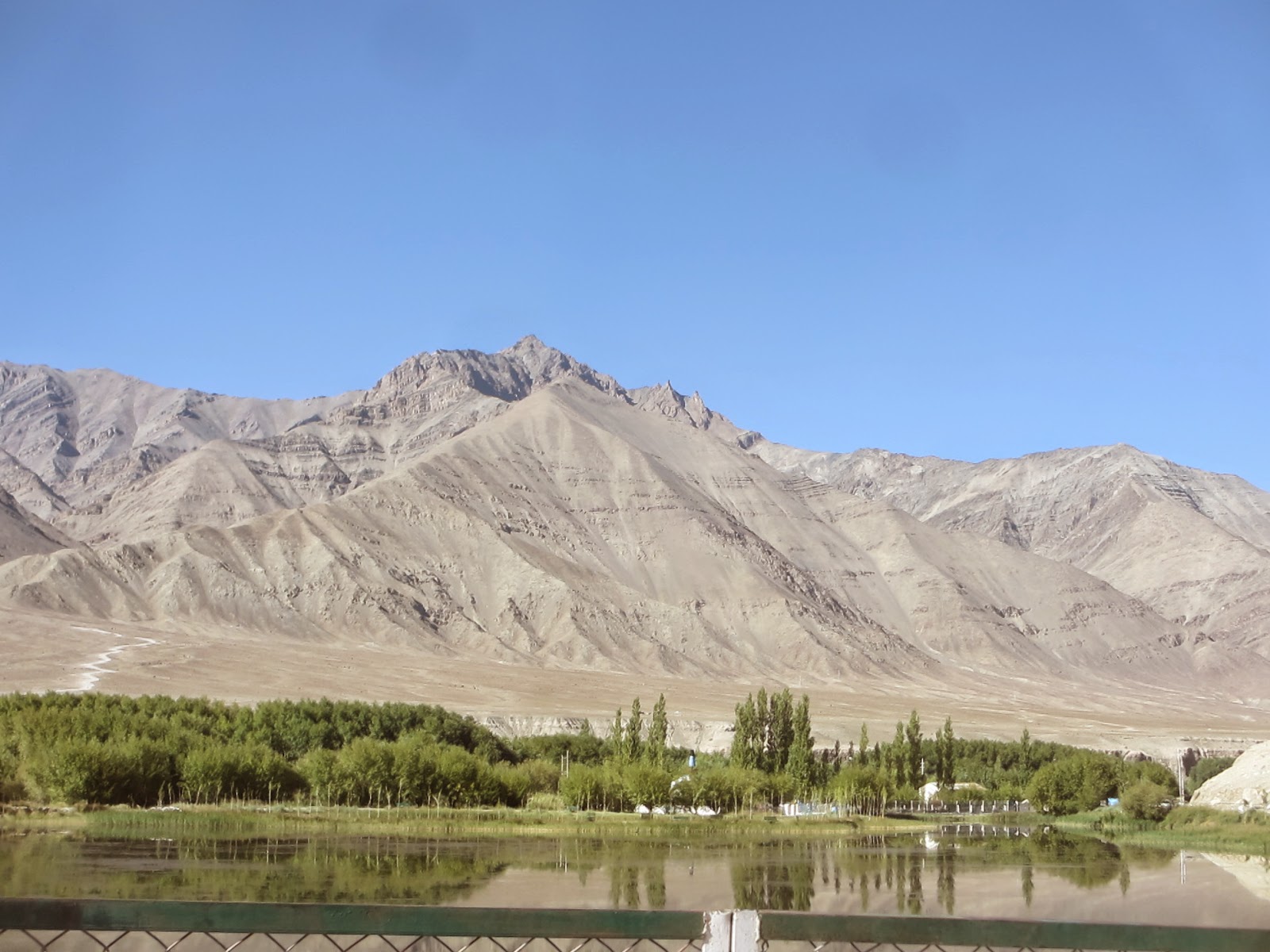
The mystical Lunar landscape and the genuineness of the local people make Ladakh one of my favourite travel destinations. Yet Ladakh can sometimes be a challenge to visit.

My main concern in visiting Ladakh is the weather. In the winter, the temperatures often dip below minus thirty Celsius (-22 F). I for one avoid cold weather, much like I avoid locations riddled with bird flu and the H1N1 virus. I obviously don't do ‘cold’. But Ladakhi summers are lovely. From June Through half October, the weather is palatable, although October can be bracing.

Another situation to be aware of, if you choose to visit, is the summer sun. Because Ladakh is a dry environment with the little or no rain (most of the water is runoff from the
Himalayan Mountains), the skies are iridescent blue with a gruelling sun blazing down every day. Strong sunscreen is a necessity.

Dogs in Ladakh: Stray dogs in Leh are a reality. Many dogs with no homes wander Leh. These dogs my Ladakhi friends refer to as ‘skanky’ (the word for street) dogs do not travel in packs, nor do they bother the population just as the locals don’t interact with them. They are beautiful big, ginger colored dogs with thick coats, much of which are unshed, left over from the previous winter. There is a symbiotic relationship between the dogs and the community. In the summer, the dogs get most of there food from restaurant leftovers and in the winter the locals put out food for them. There are always fresh litters in the spring of cute teddybear puppies that are amazingly huggable. I am told in the winter they huddle together and obviously procreate as they seek
warmth from each other. I have seen only one veterinarian office in all my travels in the country, and that was in the community of Saboo, about ten miles outside of Leh.
Some locals own small white power puff dogs, they value greatly. So I doubt that any vet(s) in the country, if there is more than one, have any interest in helping the ‘skanky' dogs, some of whom have major physical problems; all of whom need to be neutered or spaded. If I were ‘rich’ I would get some Veterinarians for at least a summer season to help those needy animals.

Medically, if a traveler has an orthopaedic problem - my latest was an elbow fracture - my experience with the local government hospital has been excellent. It costs 5 cents to see a doctor and 50 or 60 cents an X-ray. Although there are always masses of locals waiting to see the doctor, they
all expect you as a guest in their country to cut the cue and go before them. Ladakhis are really kind people.
Although I have traveled extensivel in the country, I have yet to visit Pangong Tso Lake, which is owned one quarter by Ladakh, India and the other three quarters by China (actually in Tibet). There are other areas of Ladakh which have a border with Tibet as well, and the Indian government must maintain troops along this border I am told because Chinese soldiers stationed along the border, often carry out hit and run raids across the border just to harass the Indian army and government. I understand that during these surprise raids, the Chinese will disrupt an Indian camp, maybe burn a camp facility and then return back across the border to their own camps. I have also read about these attacks in the local Indian newspapers. There are negotiations, the Chinese retreat and then it begins again. I understand from a military source that these kinds of incedents also happens along the Sikkim/Chinese border in North-eastern India. This is of no worry to tourists as we are not the target. It is just another interesting fact about the locale.

Although Ladakh is part of the Indian state of Jammu Kashmir, it still has a King and royal family. He is always voted to represent the Ladakhi people in the Indian Parliament, and mixes socially with his subjects at weddings and funerals, or what ever important event happens within a Ladakh family.

Buddhist Ladakhi families tend to be smaller that their Ladakhi Moslem friends and neighbours. One or two children born within family seem to be the norm. No child gets his/her name from their parents, but rather a Lama or Rinpoche (equivalent to a Bishop or Cardinal in the Catholic Church) names all Buddhist children born in families belonging to the Tibetan Buddhist religion. Each child’s name depends on the time and date of the youngster’s birth. Each name has a meaning, thus names are generic, so both boys and girls may have the same names.

The further into the hinterlands of Ladakh one travels, the less princely the accommodations. One can stay in little guest houses and/or monasteries, in some places visitors ‘tent’ or stay with locals. What ever your travel plans(style), Ladakh has much to offer. I could go on and on with exhalations about this beautiful area of India, but may I end with visit Ladakh for your selfs. It’s a holiday you won’t regret.
                        ...........................................

RE: My fascination with Mr. Modi, the new Prime Minister of India


Mr. Modi has really excellent plans for India: cleaning up Varanasi and the lower Ganges River, general cleaning up of the country, and pushing the importance of spreading Yoga and Ayurvedic medicine to the world stage. He has come out against the attacks on women, and we are seeing more judicial action being taken against the perpetrators.

Yet in education, “Professor Y. Sudershan Rao, the head of the Indian Council of Historic Research, backed by Mr. Modi, believes that the events of the Mahabharata and Ramayana, the wonderful Hindu historic epics” (whether these are true events or not I can’t say, I wasn’t alive during that time period). The professor also said that “Indians were flying aeroplanes and carrying out stem research 5000 years ago” are true historic facts of Indian history. While “in Gujarat new student text books state that ‘cars were invented in ancient Indiaand told children to draw an enlarged nation (of India) to include (the) countries of Pakistan, Bangladesh, and Afghanistan.”

Although I am by no means an Indian historian, I do know that when the Turkic-Persians moved south into India, they had already conquered Afghanistan, and what is now the country of Pakistan. I know that Afghanistan became an independent country sometime during the 19th century. I also know that when the British left India in 1947, what is now known as Pakistan and Bangladesh were partitioned off from India as a separate Muslim state. So if those children are being taught historic references fine. But if they are being taught that modern day India includes Afghanistan, Pakistan and Bangladesh as well then........

“The last time the ruling Bharatiya Janata Party was in power a decade ago it (also) began to rewrite school books in line with Hindu nationalist orthodoxy. These claims can be

interpreted as sign of an inferiority complex,” said Romila Thapar, a leading scholar on ancient India.”


In my opinion, India is a country that has developed some of the most important and purposeful philosophical principles in all the world... Here is a country of real reasoners and thinkers. Why should the BJP party care if they invented some mechanical thing? Who is it that Silicon Valley wants to employ, young educated Indians. They did not come by these abilities yesterday, great philosophical thinking is ingrained in the Indian physic, to hell with the invention of the car. When will the BJP realise that Indians, as a society have intellectually already surpassed the industrial revolution hundreds of years ago? 

Addendum:  Recently Mr. Modi has come out against the spread of outrageous ideas by any of his compatriots. 

Monday, October 27, 2014


from left:  Dolma, mother holding little Amo, Disket holding little Dlsket, Me, Dolkar, Disket's son, and Amo.

TRADITIONAL WEDDING CLOTHES  

Desket (her name means Happy) wearing a wedding
dress
Women’s Ladakhi traditional wedding clothes are quite ornate.  The bride actually wears two dresses, one layered on top of the other.  One dress is given to her by her parents, the other by the mother of the groom.  Then added are special ear rings, a felt like hat the extends out like Micky Mouse ears,(Ladakhi friends please forgive my comparison) but sideways, and then added to this is a long head covering of turquoise and some jewels.  Below are my friends who are modelling their wedding their garb for you, my readers.   


Darket ( name means goddess)and Amo dressed for their weddings.
Amo's long earrings are called Aa-long
Amo, who married the son of the family,
Jigmet, as the first daughter in her family,
she  got and wore the Parak, the turquoise
headdress at her wedding.
Dolkar modeling the Tasru or black half hat worn under the
Perak.
Back view of the Perak headdress
worth $10,000.
Amo wearing a gold necklace,
value around $5000. And an
Antique coral and turquoise necklace

Dolkar being the second daughter did not wear
the turquoise Perak (hat), because it was inherited
by her older sister, Disket. But she is also wearing a real
gold disk necklace and strands of pearls.


The bride wears a beautiful cape that is made of fine materials and sheep's hair. I am sorry I do not know the name for it.  When she is a mother of the groom, she will also wear a cape such as this at her son's wedding.


These pictures were taken in Dolma's lovely garden


The garden is in the back of the lovely Jigmet Guesthouse and Hotel
Dear Dorje and Dolma's family, I hope I got this all correct.

Next entry: LAST DAY OUT.  

Friday, October 10, 2014

Three Friends
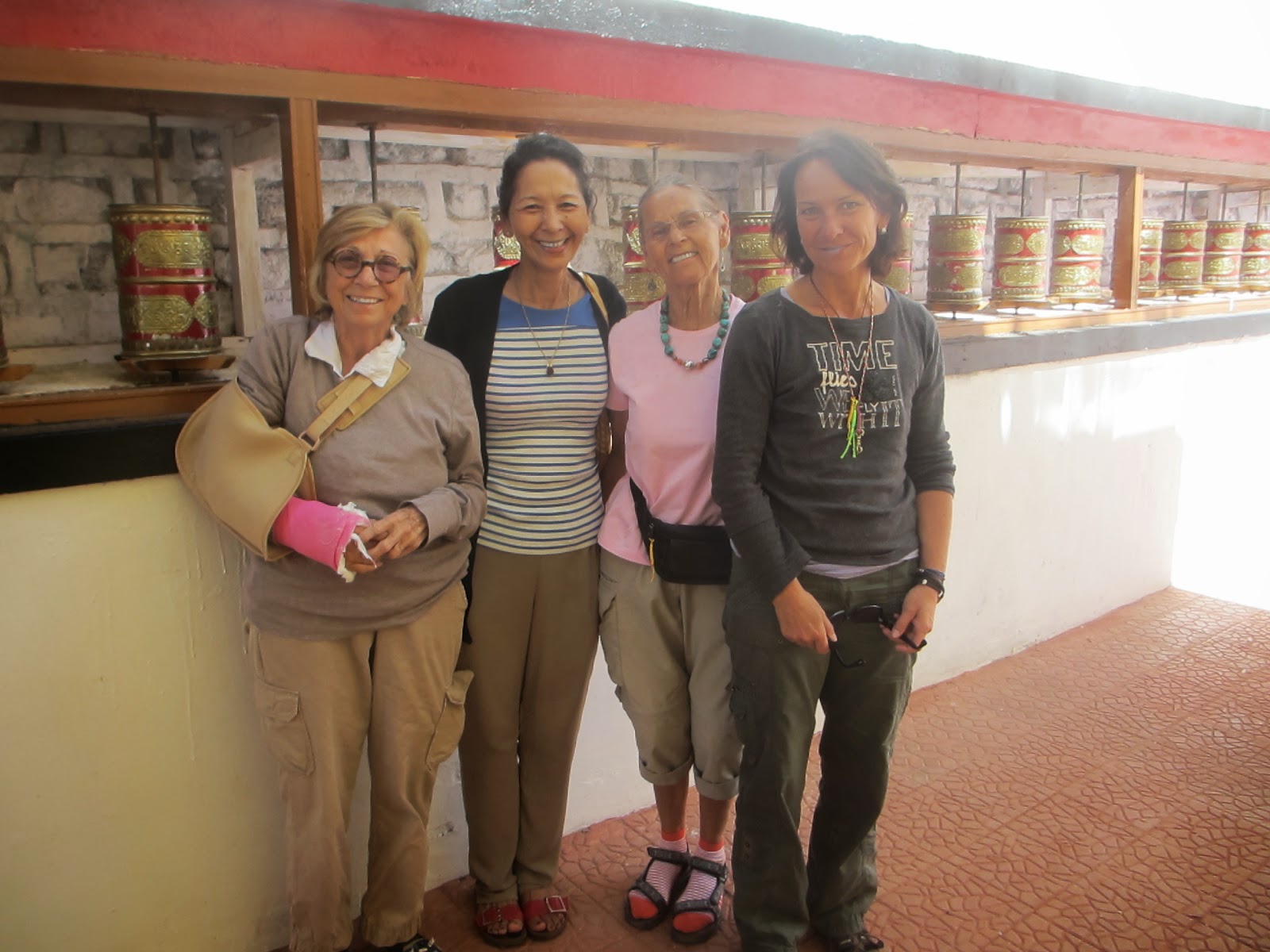
On Sunday, Dolma, Dolma and I hired a car and off we went out to Traktok and Chemrey Monasteries.  Both my friends are Buddhist, so going to the two monasteries  was an important day of prayer and offerings for each.  My Dolma from Jigmet Guesthouse &Hotel dressed in her traditional Ladakhi clothes, whereas my other Dolma (not from Ladakh) dressed in her regular street clothes, yet each were equally devout.  On our drive to the two monasteries, we stopped at a small roadside shop so my companions could buy wicks and oil for the butter lamps as gifts to each of the monasteries.


Dolma from Jegmets Guest House, Me,  Dolma, my favorite  jeweller


First we went to Traktok ( some times spelled, Tak Thog) Monastery, which is 50 km (about 33 miles) from Leh.

A young boy, there for schooling

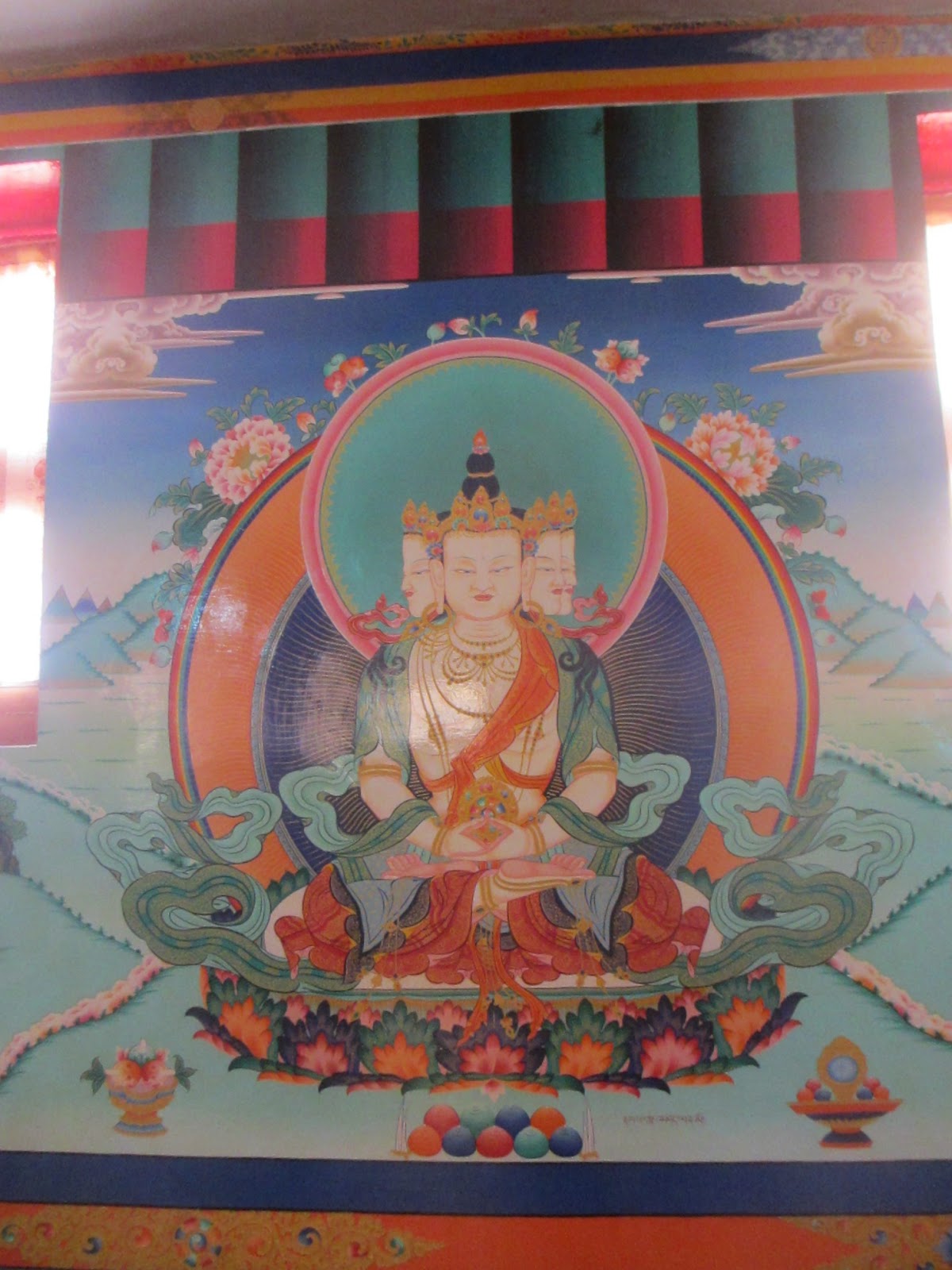
Beautiful Buddhist wall painting

Traktok Monastery built right into the mountainside


I understand it is an old monastery, but as to it’s age, I have no idea.  The interesting aspect of Traktok is that is built right into the rock, or mountainside, if you will.  Although it is a small monastery, it has beautiful paintings both in and outside in the courtyard area. Inside is a special cave that is often used as a meditation sanctuary for a single monk.  This area is guarded by yak horns and is rarely open to visitors - only when a meditating monk is not in residence.   

After our visit to this monastery, we were offered tea, then off we went to Chemrey Monastery which sits on a summit, with the surrounding Himalayan mountains as a beautiful backdrop. 


Chemrey Monastery
At the bottom of the road we passed old and new chortens (stupa shaped Buddhist shrines found mainly in Ladakh), then up the steep drive, we passed typical little Ladakhi houses that surrounded two sides of the hillside. At he entrance to the gompa (another term for monastery) our driver parked and we entered, and went immediately to the top level temple within the monastery .  The whole monastery is protected by an historical spiritual teacher or guru. This guru of the monastery, had dedicated the upper temple to men only, so although we ladies could not enter, I was allowed to take a photo.


Male only prayer room

There are two other temples plus butter lamp and  book chambers which can be visited by the public.  Besides its beautiful paintings, Chemrey also has a small interesting museum with not only ancient war items, but  also old religious as well as everyday life artefacts. Unfortunately, photography was not permitted.  

Chemrey, , has been in existence sometime before 1644.  Although major renovations were done to Chamrey between 1644 and 46. It is a branch of Hemis Monastery, which is the largest and most important monastery in Ladakh.  these two monasteries are dedicated to the druk-pa kargu sect of Tibetan Buddhism, which is the red hat sect of the His Holiness Drukchen Rinpoche.
Monastery wall paintings

Wall painting of 1000 Buddhas


After our visit, we were invited to have lunch in the dinning area of the monastery.  Lunch consisted of rice, dal, and a vegetable dish.  I always find it interesting that when one gives a donation to a monastery for your lunch, they always give a receipt on which your name and the amount is written.  I often wonder who checks these?
Note the lace curtains in the India military jeep window

The monk cooks and their pots in the Chemrey Monastery kitchen


Soon we were on our way back to Leh, after a wonderful day out with my two Dolmas.

Tuesday, September 23, 2014

Images of Ladakh


Monastery on a mountain side
Typical momastery entry


IMAGES OF LADAKH


Me, Dolma, Dora, and the artist, Ruth
Stupas along the road


During a trekking visit to Ladakh, Ruth Bleif drew these numerous sketches of the country.  
A Ladakh mounain scene

The full mountain scene


A branch of apricots 


Apricots are a major crop in Ladakh.    
During apricot season, they are so plentiful, local shopkeepers hand them out to customers in their shops. Often offered with a cup of tea. There is also a wonderful apricot drink one can buy for twenty or thirty rupees in shop at the end of the main street.   This is also where one goes to refill water bottles for about 7 rupees.  Between the woven paper bags and reusing of water bottles the Ladakhis are mindful of their environment.
A  stupa and monastery windon 

A yak  


You will never see a yak in a zoo, because they can only survive above ten or twelve thousand feet or higher.  They are wonderful Himalayan pack animals, and Tibetans and other mountainous people give their yaks names groom them and treat them like members of the family.  Yaks are obviously much loved animals among Himalayan people.


If you are interested in Ruth's work, please contact her at ruthbleif@gmail.com 


Friday, September 19, 2014


A MONASTERY WITHOUT MONKS, HOW STRANGE


Me, Dolma, Dora and her friend Ruth


Dolma, my friend who sells me jewellery whenever I come to Leh, invited me on a very pleasant day out. Yet, a day I found to be an odd experience.  


Landscape along the way
 It seems her German friend, Dora with a friend named Roland, I assume both Buddhists, during one of their treks, wandered upon an antique, crumbling monastery out in hillsides west of Leh not far from Likir, a large Monastery  founded in 1088 AD.

Our first view of Ney Monastery in the distance


side wall of Ney Monastery

Here, they felt the magical powers of the area, and decided to build a new monastery on the this mystical ground.  After 12 years, they have finished Ney Monastery, but there are as yet no monks living there.  Ney has become affiliated with Likir Monastery and the monks from Likir come and have pujas (prayer sessions) at Ney but none have yet moved in.  “They will come.”  Dora believes.  But my friend Jigmet, at my hotel, says fewer and fewer young Ladakhis are becoming monks.  “We are importing monks from Nepal,” 
he claims.
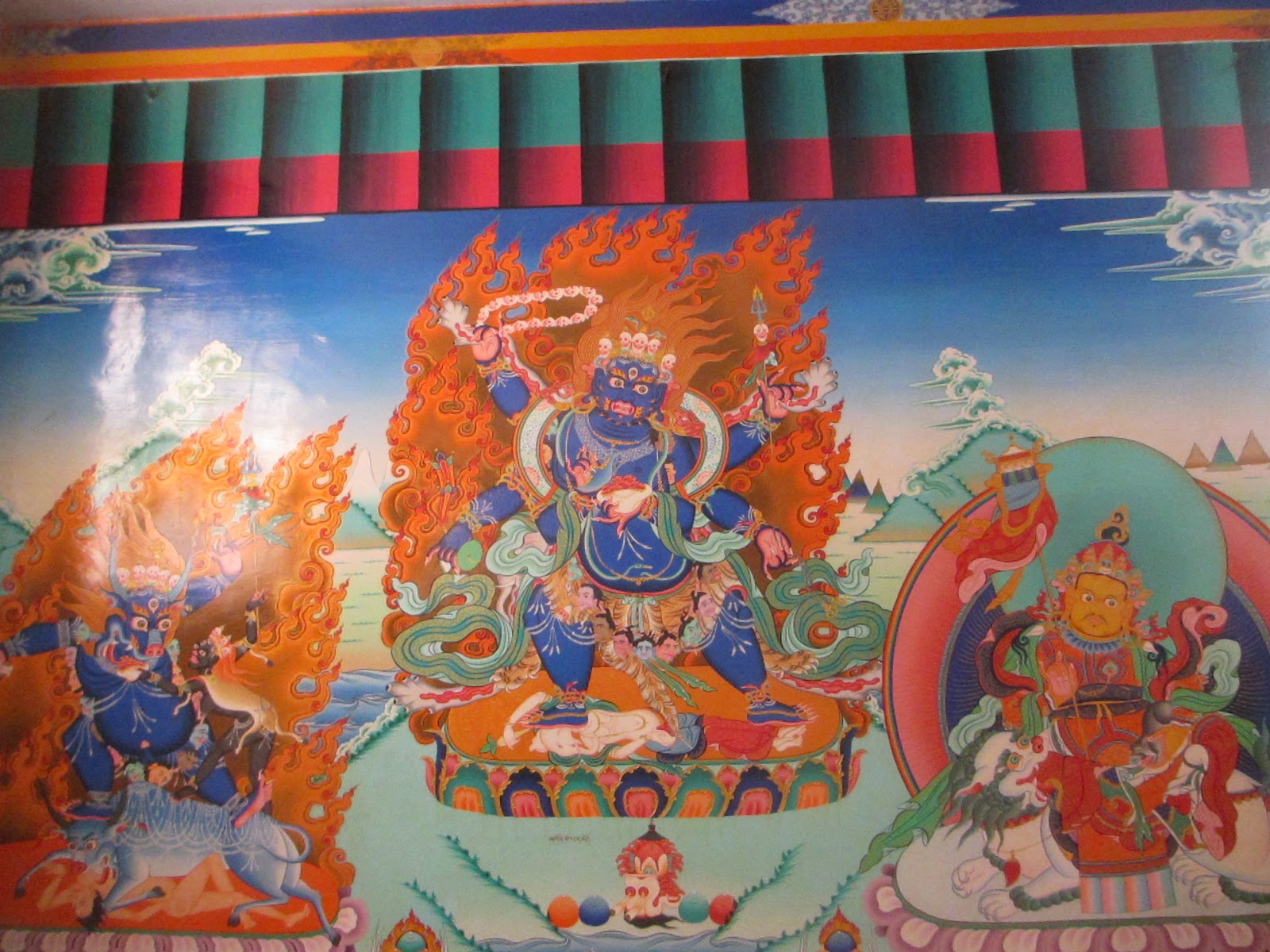
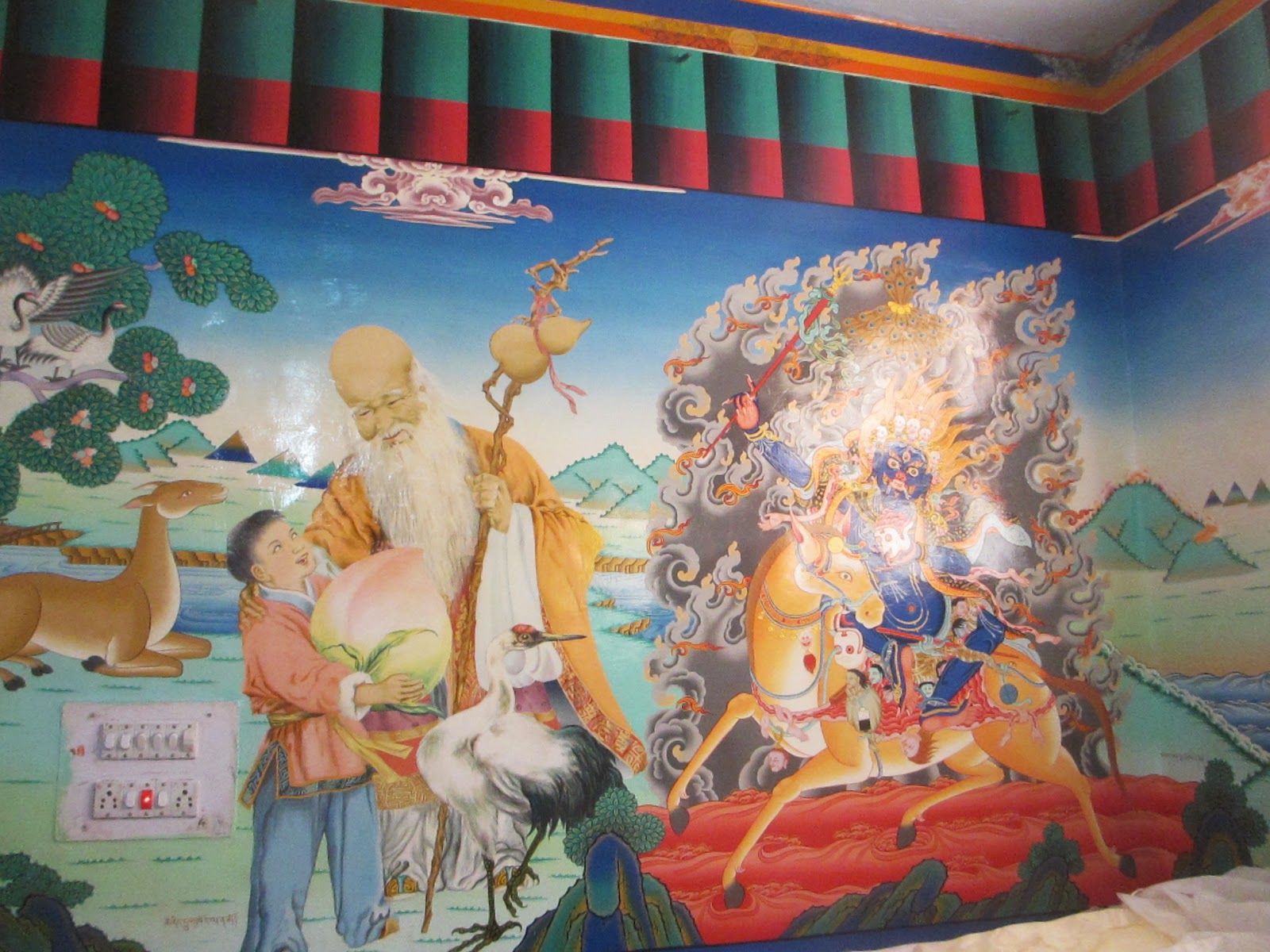
Interior monastery art 

Interior monastery art

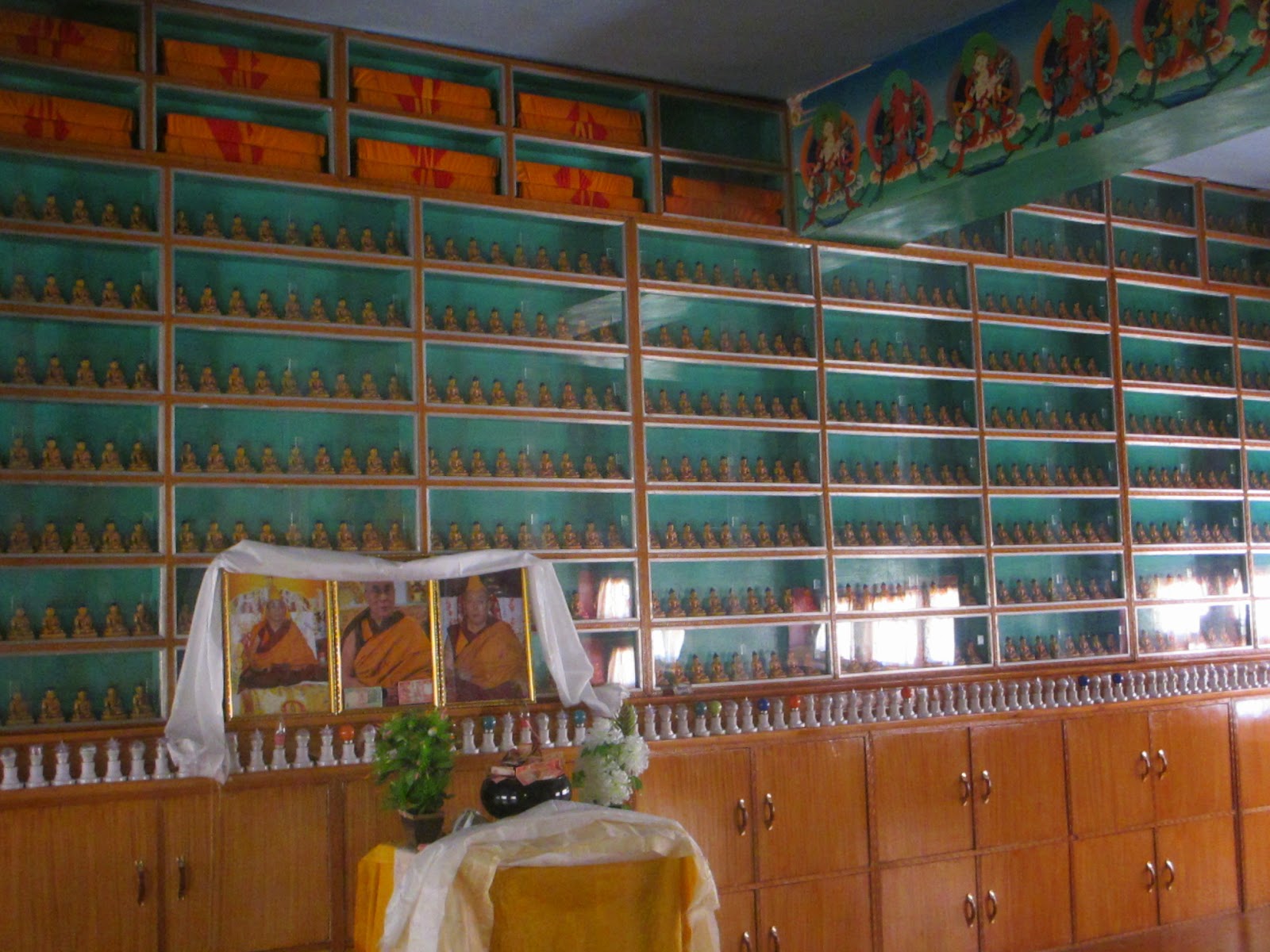
All the exterior and interior art in Buddhist Monasteries have either religious meaning or depicts an important individual or event in the religion's history.  In the prayer room of 1000 Buddhas, there are actually one thousand little statues of Buddha.


Poplar tree ceiling found in most Ladakhi monasteries and houses

Monastery room of a thousand Buddhas


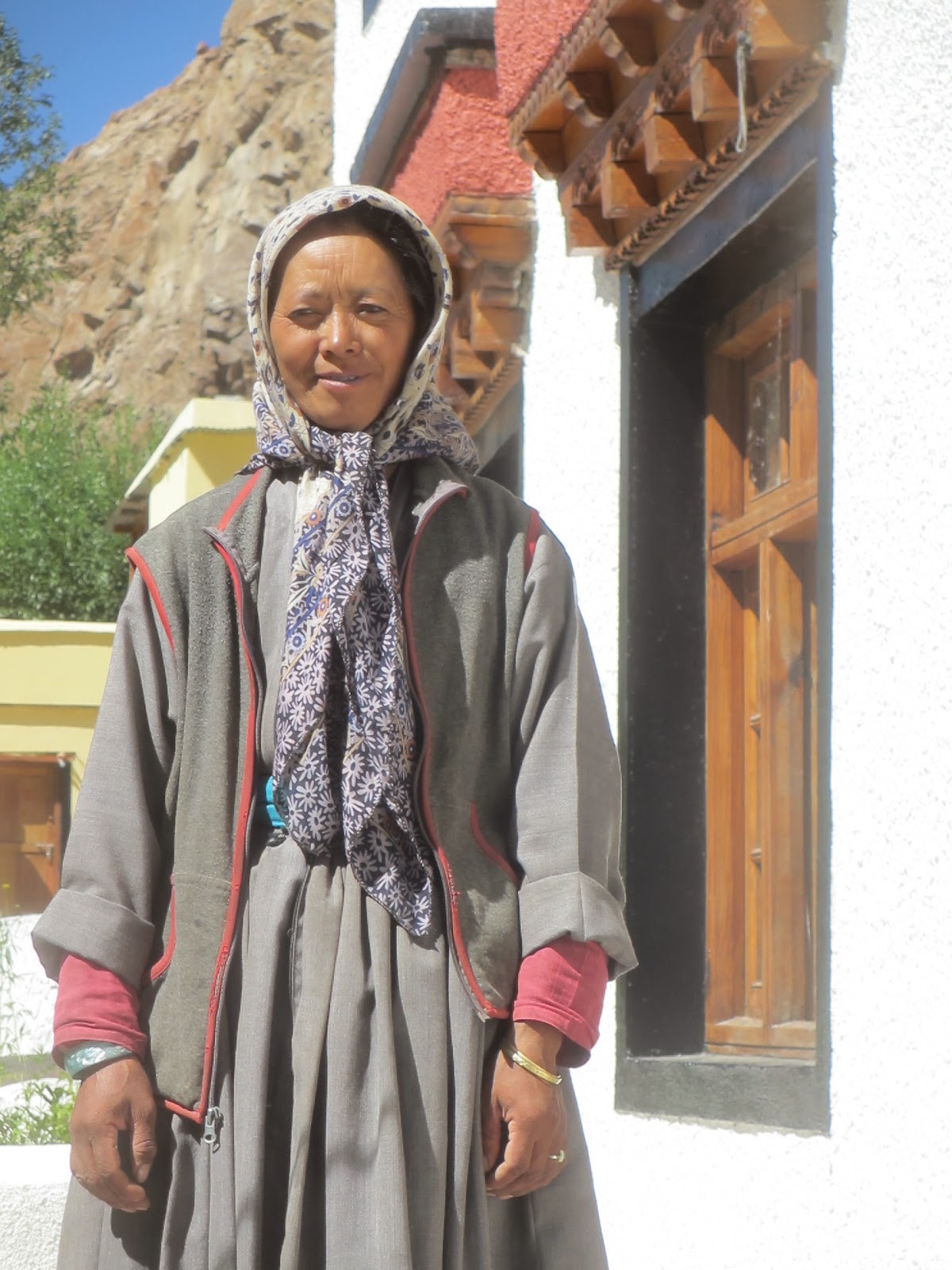
Lady who cares for Ney Monastery

- The neighbour


Interior Monastery art


Travelers come and stay at Ney Monastery (I met a German lady, who with her husband and daughter were in residence for three weeks), but even now fewer travellers have come for extended  stays.  You too, could come and stay at Ney for an extended time.

After being served a satisfying vegetarian lunch, and taken a pleasant country side walk down the mountain road which leads to Ney, home we drove, back to Leh and our respective hotels.  
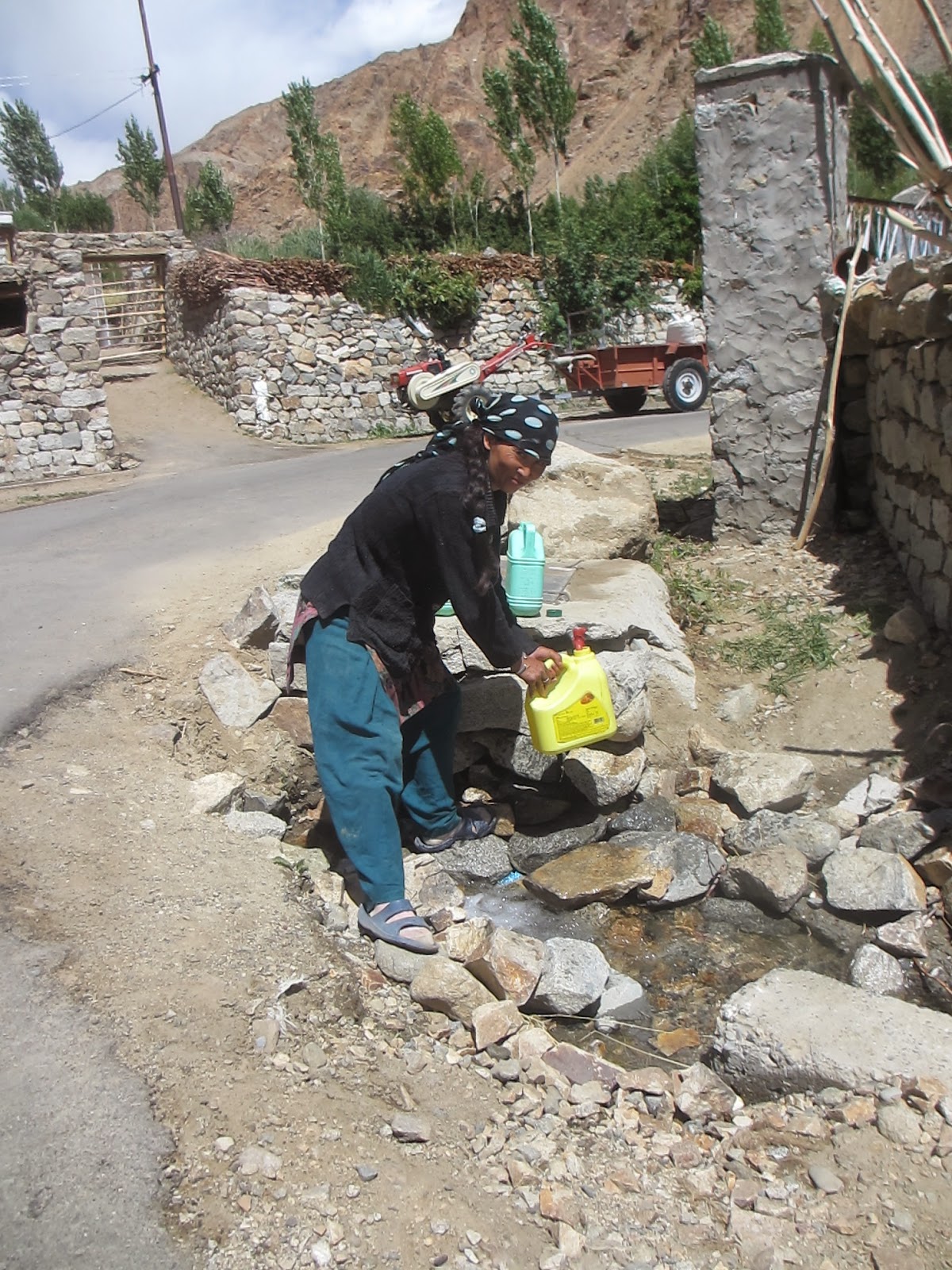
A local getting her water from a mountain stream

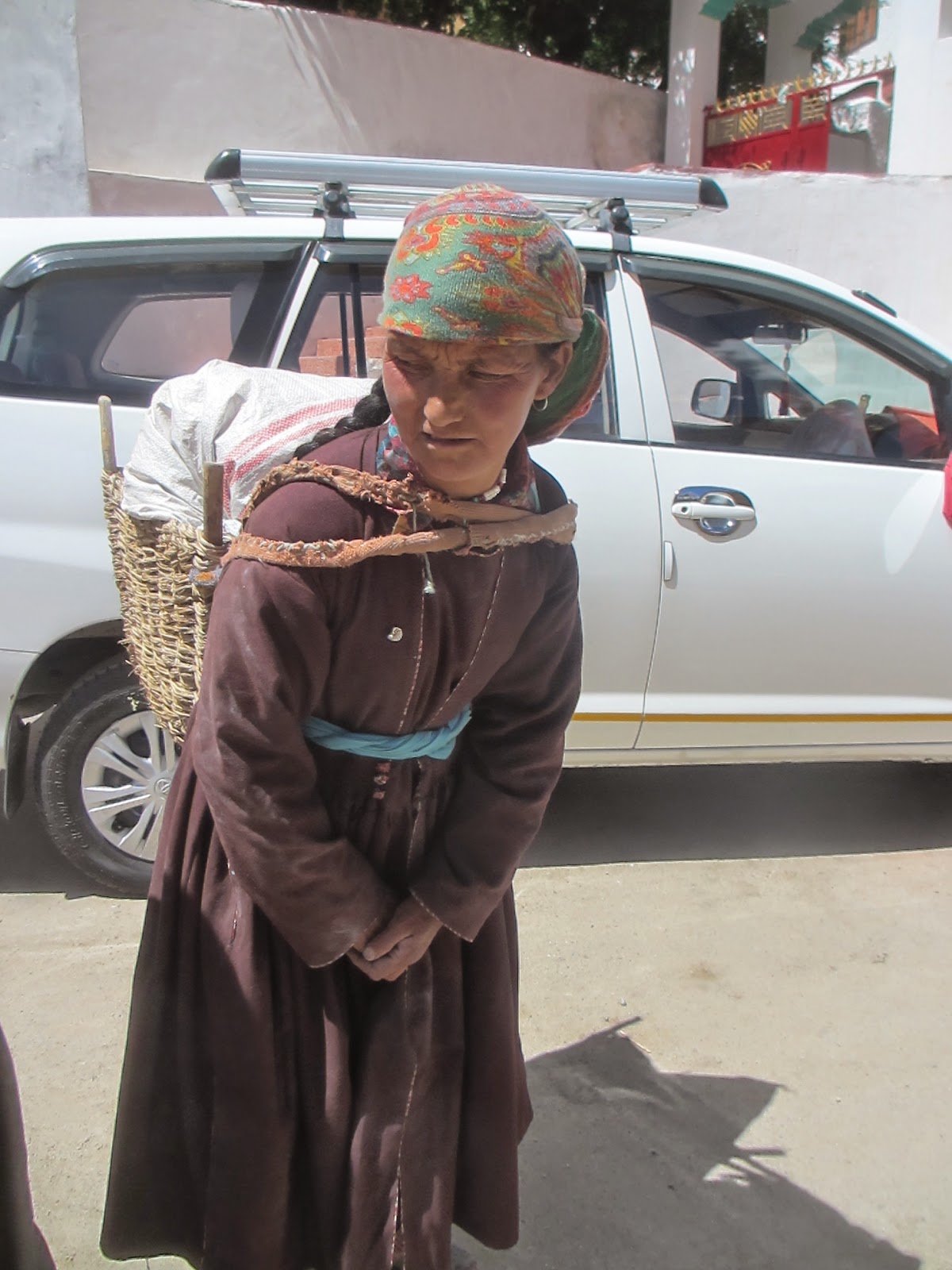
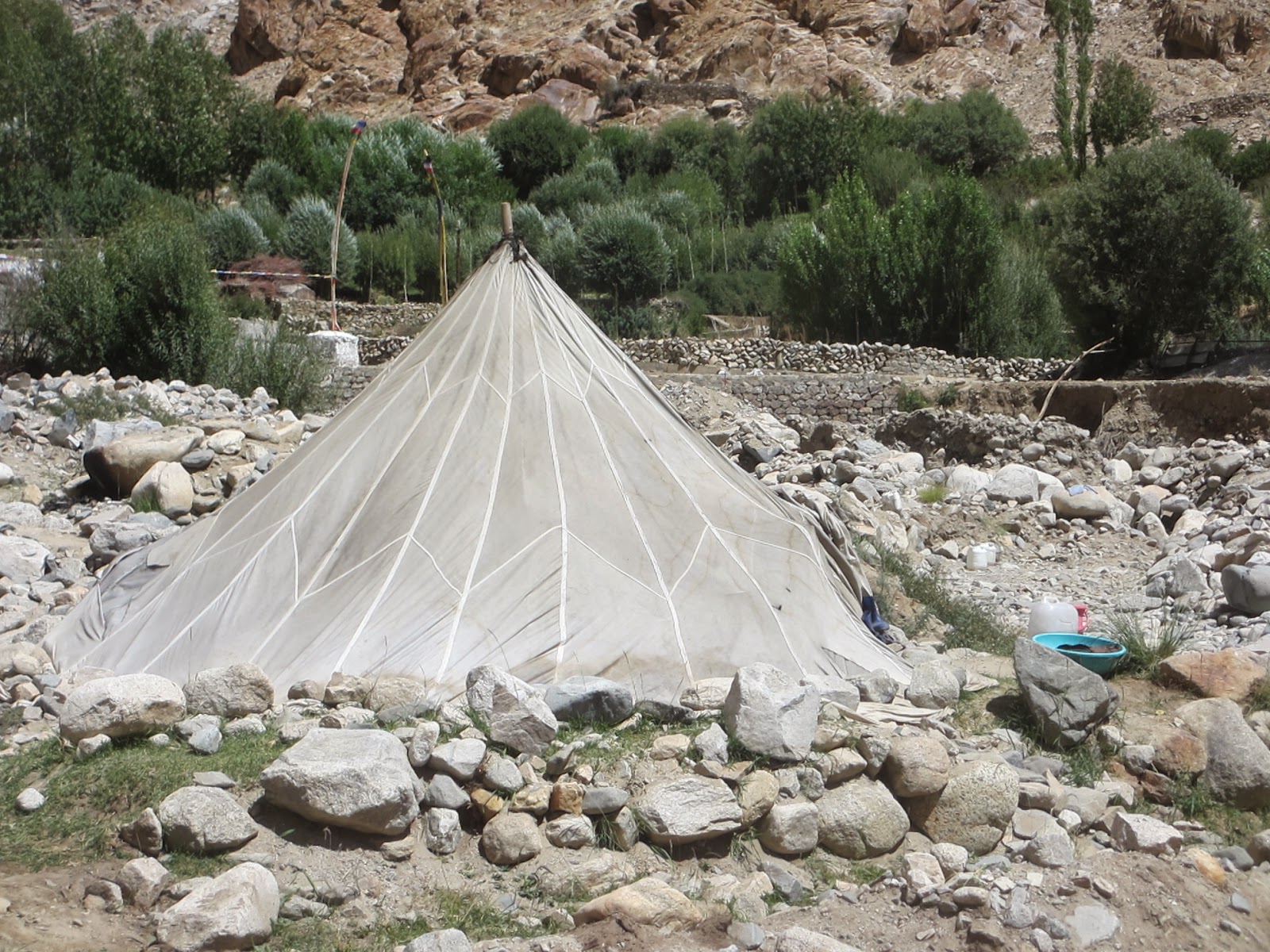
A migrant worker.s home 

One of many streams running down from the Himalayan Mountains

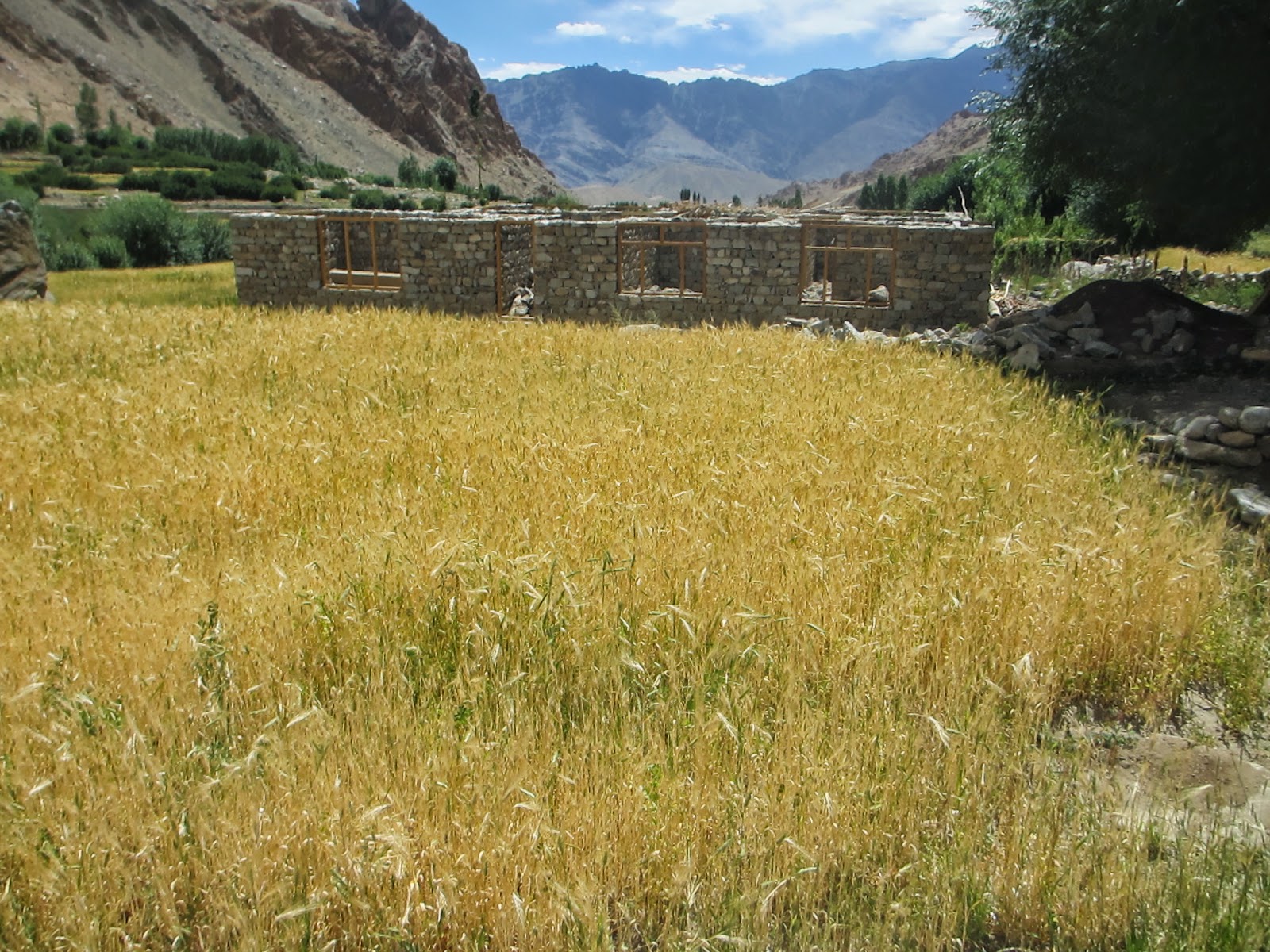
A field of Barley

A local house
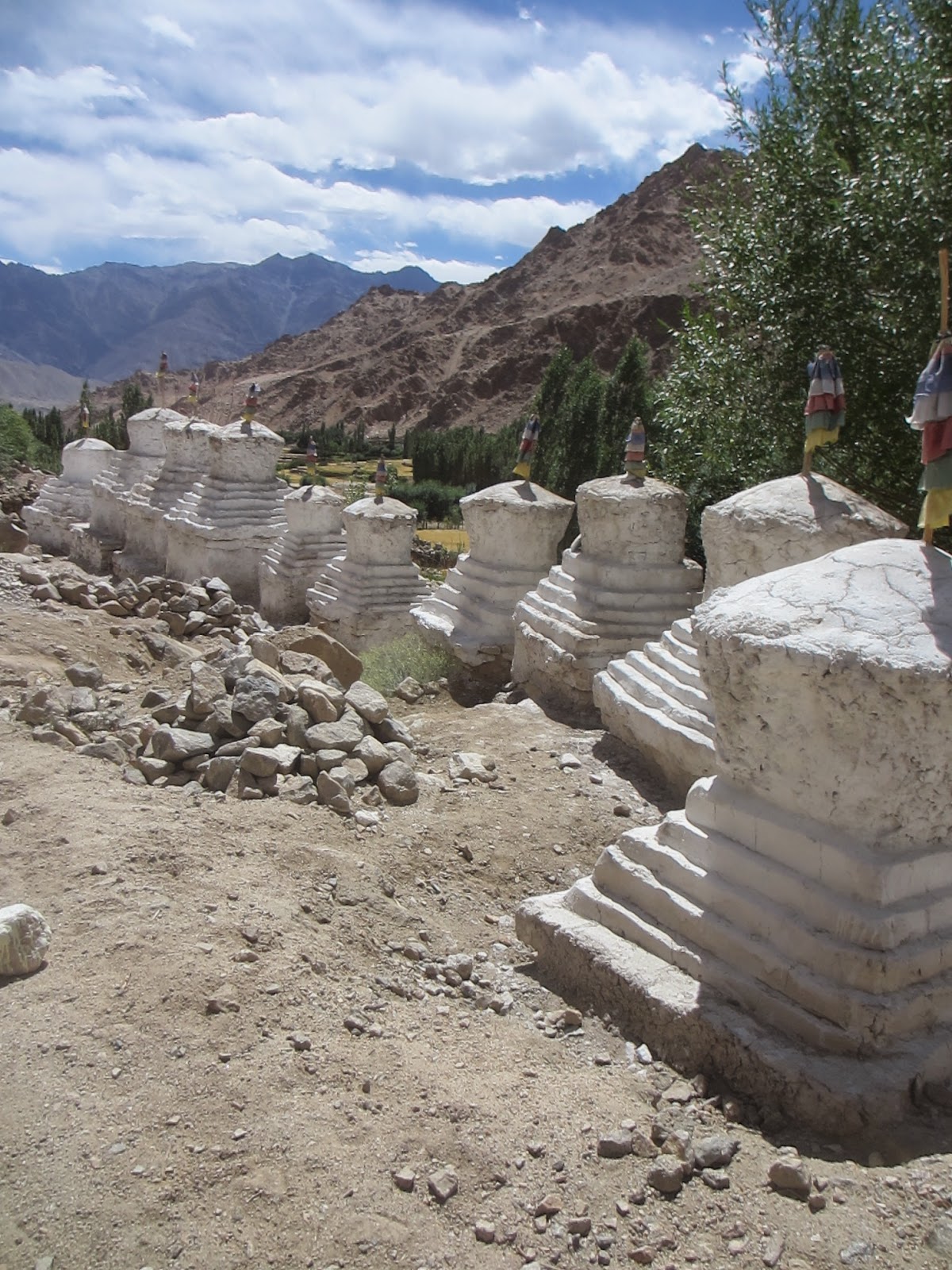
Old stupas along the road

 A view of Ney Monastery from the distance


NEXT: SOME BEAUTIFUL SKETCHES