GIR
NATIONAL FOREST
&
THE
ROAD TO BHUJ
The overnight train from Ahmedabad
to Veravel arrived a little before six in the morning. The driver stowed my suitcase in the back
bin of the three-wheeled tuk tuk, as I settled into the back seat to be
uncomfortably jostled about for the next 20 kilometers. Departing the main road,
we turned left on to a mean looking dirt track, little more than a lane
bordered by a parched deciduous scrub forest. After a bumpy ride along a long white wall,
we turned into the Savaj Resort and I was deposited at the office
entrance.
 |
| Reaort's charming little cabins that the government does not let Savaj open for tourists |
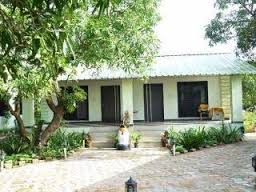 |
| My room on stage right. |
Savaj Resort is rated no. 3 among
BBs and Inns near Gir National Forest on Trip Advisor. Even with a reservation, my arrival was a
surprise to the staff. Not only was I was a western, not their usual clientele;
but also a ‘woman’, traveling alone. I
was assigned a very nice room and sent off to lunch. The resort price includes
three meals a day, of course all Indian food.
Except for breakfast, their choices being somewhat of a trial – I enjoyed a bit of granola with my yogurt – lunch and dinner were very good.
 |
| My actual room - comfortable with TV, internet on the porch and private bath. |
 |
| Kitchen manager and his staff who were very helpful and that feed me well |
When I went to the government
travel office in Ahmedabad, they neglected to inform me that I had to have a
reservation to get into Gir National Forest.
This was a problem. Here I had booked four nights at this resort and I
was blocked from the very reason I had come here, to see the forest and hopefully an Asiatic lion or two.
The staff said there was no way I
could obtain a reservation into Gir at this late date. I felt there must be some way to get entry,
and that these young men who ran Savaj Resort were thwarting me because of my
Gender. During a visit to Rajasthan, I had
experienced the same attitude among the young men in that Indian state as well. (Note: An Indian female friend told me,
she too was treated like second-class citizen when traveling alone during her
Rajasthani travels). I was also nickel
and dimed when ever I was hiring a car or a rickshaw (I learned later,
transportation rates were set so each of the two young hotel mangers received a
cut of the price charged).
Fortunately, I became friends with
two Indian/American couples, each a Mr. and Mrs. Patel, both of whom had moved
to the States during the 1960s. Yearly, they
came to Savaj Resort to holiday with Mr. Mohan Patel one of their family, and also
their boyhood friend and his wife, also a Petal, who had remained in Gujarat
and became a successful businessman in his home state. After their groups’ visit at Savaj, they would
all travel to their Gujarati family homes and enjoy the winter in the warm
Indian climate until the New Jersey weather where they lived in the States
became warm again.
 |
| Mr. and Mrs. Patel |
 |
| Mr and Mrs. Patel |
( All the Patel families are just lovely people. I am so delighted to have been able to spend time with them all).
After these gentlemen kindly interceded
for me with the staff, all of a sudden I was told there might be a way to see
the Asiatic Lions. There are two
sections to this 600 square mile park. One section may be entered on a walk-in
basis, the Devaliya Park, while the other Gir National Forest is entered reservations
only. A rickshaw was hired and off I went on the third morning of my stay. The
manger, who sent me off, told me the wrong amount of money necessary for the park
entrance fee, but I negotiated a deal in which the difference would be left at
the resort for the park mangers. The cost for westerns was $40, and 150 rupees
or about $2 for Indians. Ah! Now to see
the lions! I boarded a 24-seater bus,
and off we went cameras in hand. While traveling
around for at least 20 minutes, other than some deer, the only animals we saw
were caged leopards, who growled at our passing. Finally, we came upon three lionesses feeding
off a carcass, obviously placed in that spot for the tourist trade. The
young lionesses ate first, while the older one waited until the others were
finished. Although, they are lovely
animals, it was a paltry show for $40 bucks.
 |
| Lion eating at Devaliya Park |
 |
| Leopard at Devaliya Park |
On our way back to Savaj, I had my
driver stop at the entrance to Gir (main) section of the park. Inside, I approached a nice young man in an
office to find out how to get a reservation.
After all, this was the crème-de la-crème of the two parks and I
believed I would have a better chance of seeing, ‘the lion king’ here than in
the other park. I was sent to the head
administrator’s office, and after waiting a half hour was escorted into the
office of the assistant administrator.
He said he would have a place for me on the 3PM to five tour and to be
back here at 2:30. He also explained
that the cost to me would be $90. Of course upon my arrival back my permit was
not ready. The gentleman I had met earlier
called up to the main office and said, ‘after all, you promised her’, and the permit
soon arrived.
I was finally seated in the back of
a jeep that carried six passengers and off we went.
During the winter there is scant
rain, some leaves were still hang limp on their weathered branches, tearfully weeping
from lack of water. While others had given up and lay dead, strewn around the
base of the weakened trees on the now gray cracked earth, devoid of nature’s
nourishment to feed its normally beautiful appendages. I was told that for three months of the year,
in the summer, the monsoon rain turns the forest in to a verdant green, and it
creates a canopy over the dark moist soil beneath its lush green branches. With
foolish abandoned, now it was almost a graveyard of its summer eminence.
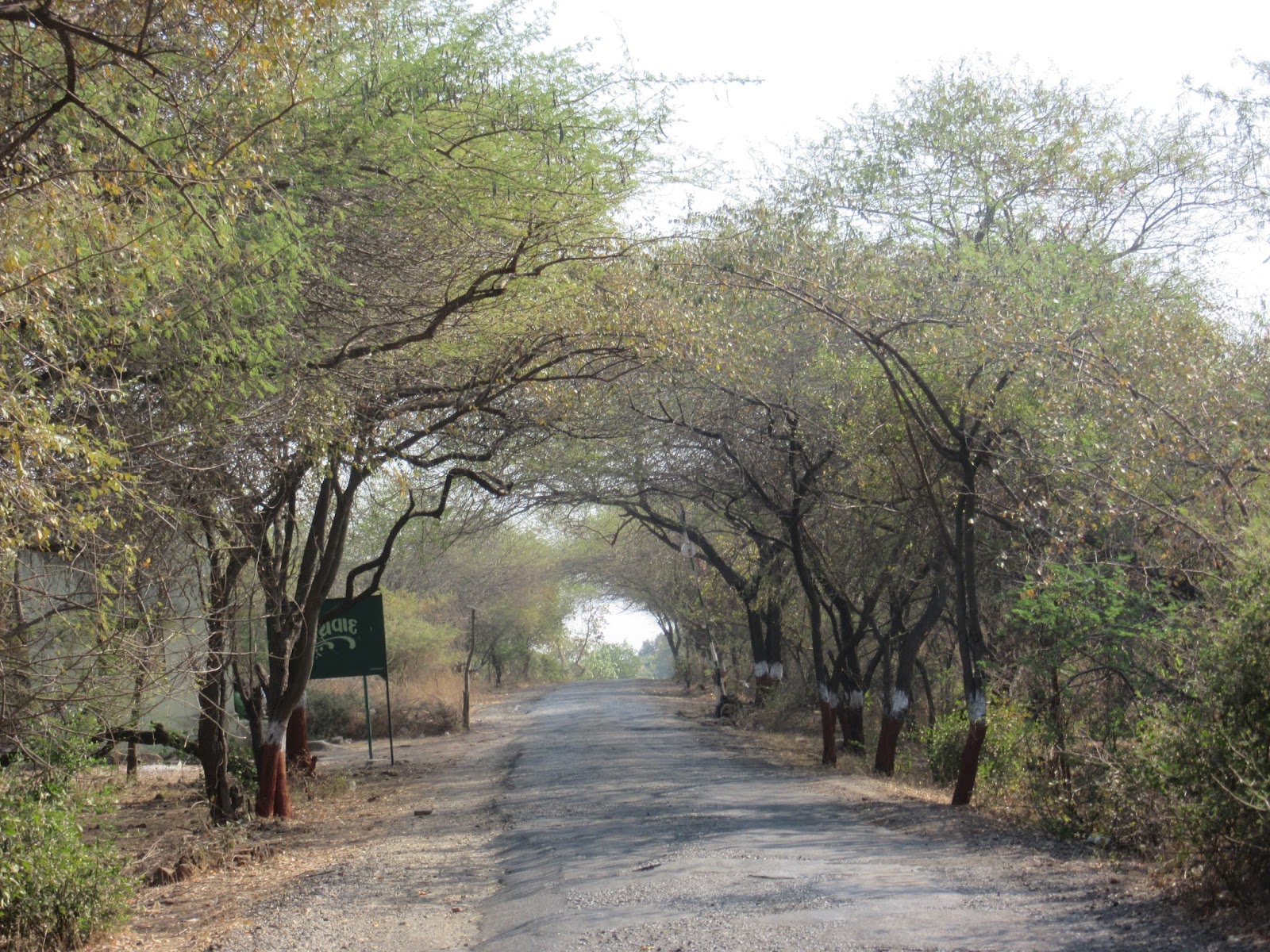 |
| A road in Gir |
 |
| A view of what most of the Gir landscape is like |
 |
| A small settlement within the Gir National Forest |
 |
| A mother and her cubs in Gir National Forest |
As we rode up the hill on our
right, we observed a small primitive Maldharis settlement, one of the few left
in the confines of the Forest. For
almost two hours we wandered seeing a deer, four horned antelope, black bucks, a
peacock, a mongoose, numerous birds, but no lions. Finally near the end of our tour, we were
taken to an area where again meat had been put out by the park staff, so a
mother lion and her cubs could be seen feeding in the distance. As we rode back to the park entrance rangers
in another jeep stopped to tell us that a male lion was drinking at the water
troft but even as we rushed, he was no longer there when we arrived.
 |
| etheral Gir Forest view |
Obviously, I will never go to Gir
National Forest again. What a rip
off. Since my return home, I have
learned that both Mumbai and Bangalore have ride through animal parks both of
which have Asiatic Lions. Also, most lions sleep19 to 20 hours a day and do not
come out until about 10 PM. In 1900,
there were only 20 lions left alive, victims of hunters and poachers. A local ‘prince’ decided they were worth
protecting, and because of his efforts there are now 500 lions, in the 600
square mile forest. Unfortunately
because of the increase in their numbers the six hundred square miles is not a
large enough area to sustain the lions’ survival. Currently, it is not unusual for a pride of
lions to show up in a village and eat a cow or water buffalo, but never a
local. The lions stay away from the villagers’ barking dogs, as they are the
prey of the leopards. Rather, the lions live side by side with the villagers
and never attack people, unless they or their young are threatened.
Although I would again stay at Savaj Resort, (the rooms and grounds are very nice, and the staff really did try to make me comfortable), my best advice to the traveler who
must go to Gir National Forest, is find a nearby village where the lions are likely
to visit, rent a room from a local, and hang out there until the lions arrive. A
more clever choice is to go on an African Safari. African lions are the larger of the two species, but bottom line - a lion is a lion.
 |
| Lady walking through a local village |
 |
| Drop In Here! - a Savaj trash container found through out the resort. |
I had arranged to leave for Bhuz
the next morning, and the hoteliers guaranteed that the driver would be
‘English speaking. Of course he was not.
Non-the-less, I was on another adventure, off to see one of India’s main centers
of handmade Indian Textile production, and the Kutch.